







340B software implementation timelines can change based on how many locations need to be connected, the current state of policies and procedures,, how clean the underlying data is, and how quickly each system can be validated.
The Average Timeline for 340B Software Implementation
Understanding typical timeframes helps set realistic expectations for your organization’s rollout. Most 340B implementations cluster into predictable ranges, each tied directly to the footprint and operational complexity involved:
- 6–10 weeks for smaller or straightforward footprints
- 10–16 weeks for larger systems with more variability
- 16–24 weeks for multi-entity or complex environments
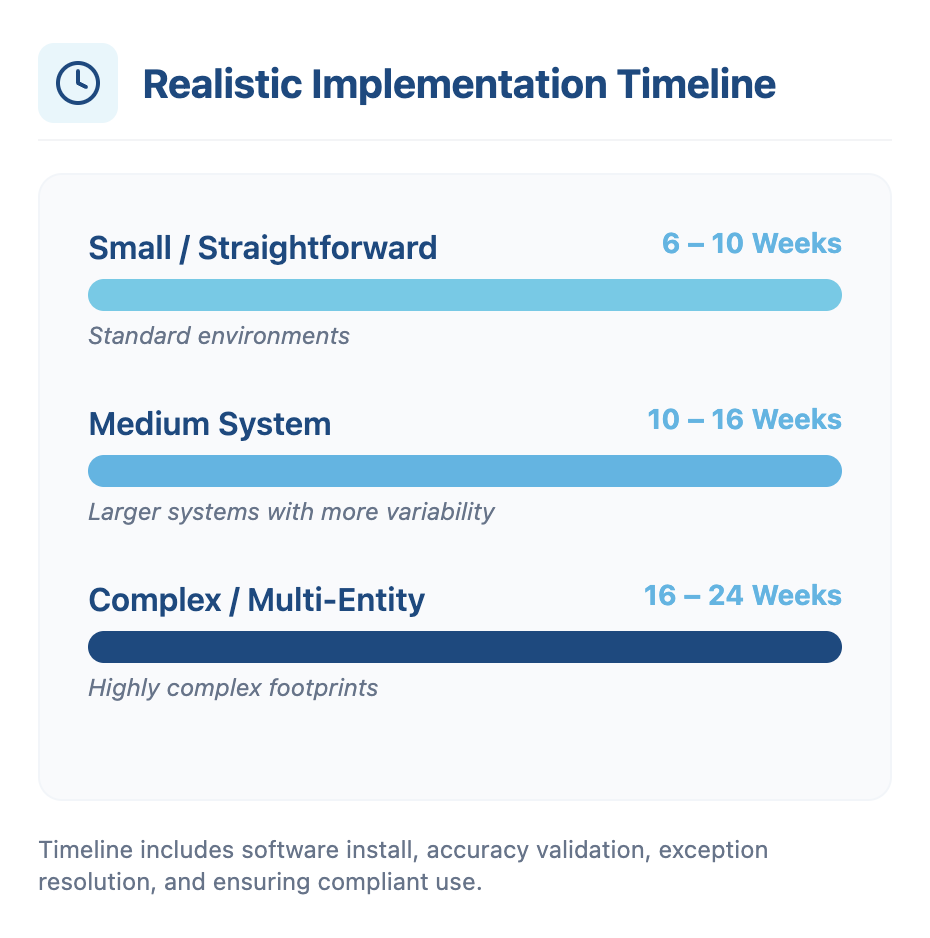
6–10 weeks — Smaller or straightforward footprints
Systems with limited locations, minimal customization, and clean data inputs. Workflows are standard, stakeholders are few, and validation cycles move quickly. Example: Single hospital with integrated clinics, limited Third Party Administrators (TPAs), and a single EMR platform.
10–16 weeks — Larger systems with more variability
Installations involving multiple covered entities, mixed workflows, or moderate data normalization. More stakeholders, more configuration, and longer validation windows drive the extended timeline. Example: Regional health system with 4-8 facilities and mixed-use settings.
16–24 weeks — Multi-entity or complex environments
Enterprise-scale deployments with multiple regions and covered entities, heterogeneous systems, intricate workflows, or significant data cleanup. These require staged rollout, deeper integration work, and expanded testing. Example: Multi-state IDN with diverse facility types and mixed EMR platforms.
Compliance Considerations
Compliance requirements set the guardrails for how a 340B software implementation must function as well as the current state of policies and procedures. Implementing software solutions is easier and more efficient when your current processes are well-documented and organized. Policies around the following influence configuration decisions:
- Eligible prescribers
- Eligible locations
- Patient definitions
- Contract pharmacy oversight
- Duplicate-discount prevention
If policies are outdated or inconsistently applied, teams often need to rewrite or clarify them before the software can be aligned. Strong, current compliance documentation accelerates implementation; gaps or ambiguities extend the timeline because they require legal, pharmacy, and compliance teams to establish clear rules before go-live.
Other factors impacting 340B implementation
Several factors determine how quickly a 340B implementation can move from setup to steady-state, and each one influences both the pace and the precision of the rollout.
Pharmacy Workflows and Eligibility Configuration
Each organization defines eligible patients and other aspects of required definitions slightly differently, depending on how care is delivered and statutory interpretation. Mapping prescriber relationships, encounter types, and service areas requires thoughtful review to ensure the software reflects your policy. When rules are clear and well-documented, configuration moves quickly.
When definitions need clarification, timelines stretch slightly, but the end result is greater accuracy at go-live.
Data Quality and Readiness
Data quality has a significant impact on implementation speed. Clean provider lists, accurate prescriber–location mappings, and complete encounter information allow technical connections to be built without delays. Issues like missing fields or outdated directories are common, but they take time to resolve. The cleaner the data going in, the faster the software becomes operational.
If you’re assessing how to streamline your 340B program’s compliance processes, the 340BCheck One-Pager demonstrates how Bluesight unifies disparate data sources and audit workflows into a single platform, providing your health system with a consolidated source of truth.
Testing Cycles and Exception Resolution
Testing is where timelines tend to shift. Test batches reveal match rates, may identify TPA configuration issues , and highlight global areas for implementing safeguards for diversion and duplicate discounts. They also surface exception patterns that need to be addressed before launch.
A small, predictable set of exceptions keeps the timeline steady. Larger or unexpected issues require additional testing cycles, but they also help prevent problems later in live operations.
Workflow and Team Readiness
Successful implementation depends on coordinated teams. Pharmacy, compliance, revenue cycle, and IT each play a role in 340B operations. When responsibilities are clear and access is in place, the transition moves smoothly. When teams need more time to align, the go-live date adjusts accordingly.
Keep Your Implementation Moving Smoothly
Clean data, aligned workflows, and early visibility into exceptions make the most significant difference. 340BCheck supports this by consolidating data sources, identifying issues early, and giving teams the insight they need throughout onboarding. With the right preparation and the right tools, your program can move from implementation to steady-state confidence without unnecessary delays.Schedule a demo to explore how 340BCheck can support a smoother implementation timeline.