






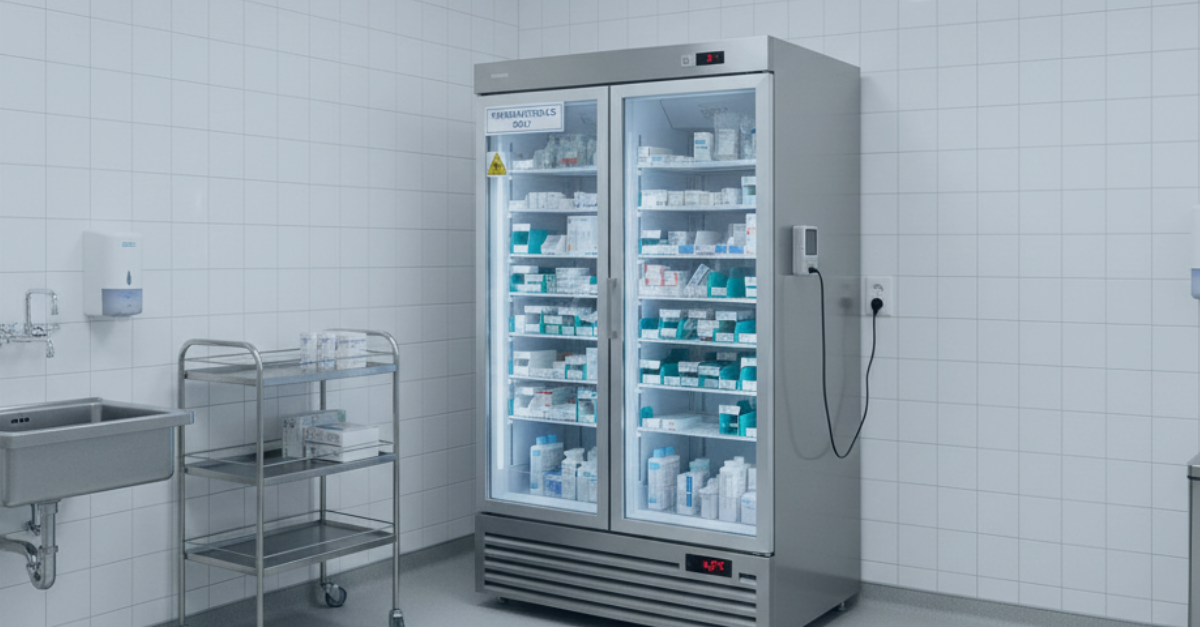
Maintaining the safety of high-value medications requires a shift from manual oversight to automated precision. When a hospital pharmacy handles biologics, oncology drugs, or vaccines, even a temporary shift in temperature conditions can lead to product degradation. Relying on RFID medication tracking allows healthcare facilities to monitor their inventory with a level of detail that was previously impossible.
Monitoring Inventory with RFID Technology
RAIN (radio frequency identification) UHF (ultra high-frequency) RFID technology is now at the center of a transformative shift in how pharmaceutical medications are managed, tracked, and delivered worldwide. By using radio waves to wirelessly transmit a tag’s unique serial number to a reader, RFID medication management systems seamlessly convert physical inventory into actionable digital data.
In health systems, RFID medication tracking helps staff keep a constant watch on every unit of medicine within the facility. Unlike barcodes that require a direct line of sight and individual handling, RFID tags can be read in bulk and through packaging. This speed and precision is a major advantage when managing large volumes of inventory in the central pharmacy, operating room, or remote clinics.
Maintaining a Digital Chain of Custody
Establishing a digital chain of custody is standard for modern pharmacy operations. It creates a permanent record of every touchpoint a medication encounters from the moment it enters the hospital until it reaches the patient. This record is vital for regulatory compliance and for ensuring that the right person has access to the right drugs at the right time.
The move to a digital system replaces the fragmented paper trails of the past. When medications are tagged with RFID, their movement through the hospital can be recorded automatically. This allows pharmacy teams to see the location and status of inventory in real time. If a drug is moved from the central pharmacy to an automated dispensing cabinet or a procedural cart, the system logs that transition without requiring a staff member to manually enter data.
Preventing Drug Diversion
A primary benefit of this tracking is the ability to spot anomalies that might indicate drug diversion. By having a clear record of medication movement, hospitals can quickly flag suspicious removal patterns.
Streamlining Audits and Compliance
Auditors from the Joint Commission or other regulatory bodies expect to see complete and accurate documentation. A digital record provides this evidence instantly. Instead of searching through stacks of binders for old logs, pharmacy managers can pull a report that shows the entire history of a specific lot number or serial number.
RFID in Cold Chain Management
Many of the most expensive and sensitive medications in a hospital must be stored within a very narrow temperature range. If these drugs get too warm or too cold, their molecular structure can change, making them less effective or even harmful.
RFID inventory monitoring can track time between temperature-controlled storage and update expiration dates accordingly. This is especially useful for last mile tracking, where a medication might spend time in transit between different departments or sit on a cart during a long procedure.
| Feature | Manual Monitoring | RFID Monitoring |
| Data Collection | Periodic | Continuous (24/7) |
| Alert Type | None (detected after the fact) | Real-time notifications |
| Human Labor | High (manual logs and checks) | Low (automated data capture) |
| Accuracy | Subject to human error | High precision digital data |
| Historical Data | Incomplete paper records | Comprehensive digital history |
By using RFID, pharmacies can leverage a solution that automatically updates beyond-use-dates for temperature-sensitive items, helping to ensure that the stability data of a drug is never a mystery.
Proactive Temperature Excursion Management
A temperature excursion occurs any time a medication is exposed to conditions outside the manufacturer’s recommended range. Managing these excursion events is a significant challenge for hospital pharmacies. Without automated systems, staff must guess if the medication is still safe to use.
Effective temperature excursion management starts with visibility. When a hospital uses a system like Bluesight’s KitCheck Anywhere, they can track temperature excursions and apply alternate expiration dates to determine when items should be shortdated. This automation allows teams to prioritize using or transferring soon-to-expire medications, helping to minimize waste.
Reducing Financial Waste
The cost of a single excursion can reach tens of thousands of dollars if a batch of high-priced biologics is lost. With accurate, real-time monitoring of excursions and expiration status, hospitals can save significant amounts of money. Bluesight’s technology helps hospitals protect their bottom line by ensuring that expensive inventory is not wasted.
Utilizing RFID for Continuous Oversight
As your health system grows, your inventory management strategy can’t afford to stay static. Manual processes, disconnected systems, and siloed inventories create waste, increase costs, and limit responsiveness.
RFID solutions like KitCheck Anywhere allow for a continuous, unified view of inventory across your health system. KitCheck Anywhere provides real-time visibility into inventory level, expiration, and recall status as well as movement, usage, and outcomes.
By replacing manual tracking with automated RFID scanning, pharmacy teams can optimize PAR levels, accelerate recall responsiveness, mitigate waste, and significantly increase inventory turns without sacrificing availability.
Request a demo today to discuss how your organization can take advantage.