








For health systems in the 340B Drug Pricing Program, the biggest financial threat isn’t always a sudden loss of eligibility. It’s the slow, silent leak of missed savings, repayment obligations, and operational overhead that compounds over time, reducing the dollars available to expand services and support community health, especially during periods of growth.
From uncaptured referrals to inaccurate documentation sacrificing patient eligibility, there are many opportunities for lost discounts and savings. And it’s not just about missing out on revenue on a transactional basis; in FY 2024, 62% of HRSA audits cited incorrect OPAIS (Office of Pharmacy Affairs Information System) records. Filing date mistakes in Medicare Cost Reports were particularly common. These administrative errors can jeopardize eligibility and result in mandatory repayments.
How to Maximize 340B Reimbursements Without Increasing Risk
Small, unnoticed errors such as eligibility mismatches, missed NDC captures, or contract pharmacy data delays can add up to major losses.
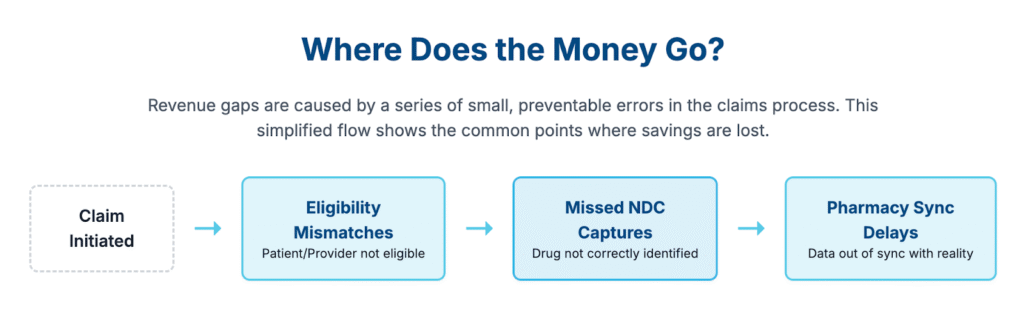
Using a 340B compliance software that provides automated eligibility and audit verification confirms each transaction meets program criteria. This approach frees up capital to focus on revenue-generating activities such as improving capture and referral rates, reducing manual work, and accelerating issue resolution. The right software helps:
Standardize documentation across systems
Disparate EHR, pharmacy, and contract pharmacy records cause data mismatches and inconsistencies. This slows audits and introduces compliance risk. Establish a single source of truth for 340B transactions, integrated directly into your claims processing and audit tools. This reduces administrative workload and makes it easier to demonstrate compliance during HRSA or manufacturer audits.
Provide proactive contract pharmacy oversight
Manufacturer policy changes often occur with little notice. These changes can immediately affect eligibility for, or access to, 340B pricing through contract pharmacies. Automated monitoring and alerts tied to contract pharmacy relationships allow your team to respond quickly. Automated OPAIS data monitoring alerts your team to contract pharmacy changes and can trigger a proactive response. Cadenced and scheduled regular rules-based audits of contract pharmacy activity keep you ahead of both compliance issues and financial losses.
Why Comprehensive Auditing Matters
HRSA audits approximately 200 covered entities annually, focusing on diversion, duplicate discounts, and GPO compliance. Without proactive internal auditing, entities face:
- Unexpected repayment demands that drain 340B savings
- Contract pharmacy terminations cutting off patient access
- Corrective Action Plan (CAP) requirements
- Potential program removal
Comprehensive auditing and programmatic oversight help identify and correct errors before HRSA arrives.
Best Practices for Preventing Revenue Leakage
Effective 340B programs should include:
- Regular internal mock audits and documentation reviews
- Integration between EHR, TPA, and pharmacy systems
- Continuous monitoring of OPAIS accuracy
- 100% transaction auditing at contract pharmacies
Manual compliance processes cannot keep pace with the volume of data and regulatory complexity—automation is essential for sustainable compliance and maximizing savings.
Software that Pays for Itself
Health systems that maximize 340B programs treat them as a strategic revenue driver. They build automation into every step, use real-time intelligence to guide purchasing decisions, and maintain rigorous oversight without creating unnecessary administrative burden. The result is stronger financial performance, improved compliance readiness, and the ability to direct more resources back to patients.
Every dollar retained through better capture and compliance represents the ability to expand services and provide greater access to care for the communities that need it most.